Alientrap Games
DuneCrawl
Credited technical artist and environment artist on Alientrap's released co-op adventure.
Commercial release
Released on PC, console and Android
DuneCrawl launched on PC (Steam) on January 5, 2026, followed by PlayStation 5, Xbox Series X|S and Android on October 19, 2026.
Alientrap lists me, Mohammed Qamar, among the development team. My contributions cover technical art, environment art, shaders, VFX pipelines, art integration and tools, as detailed below.
Funtaptic is credited separately for the Android, Xbox and PlayStation ports. My role was in the game's development, not platform porting.
Nintendo Switch and Switch 2 versions are planned separately and are not part of this release.
Project overview
Case Study Summary
Background
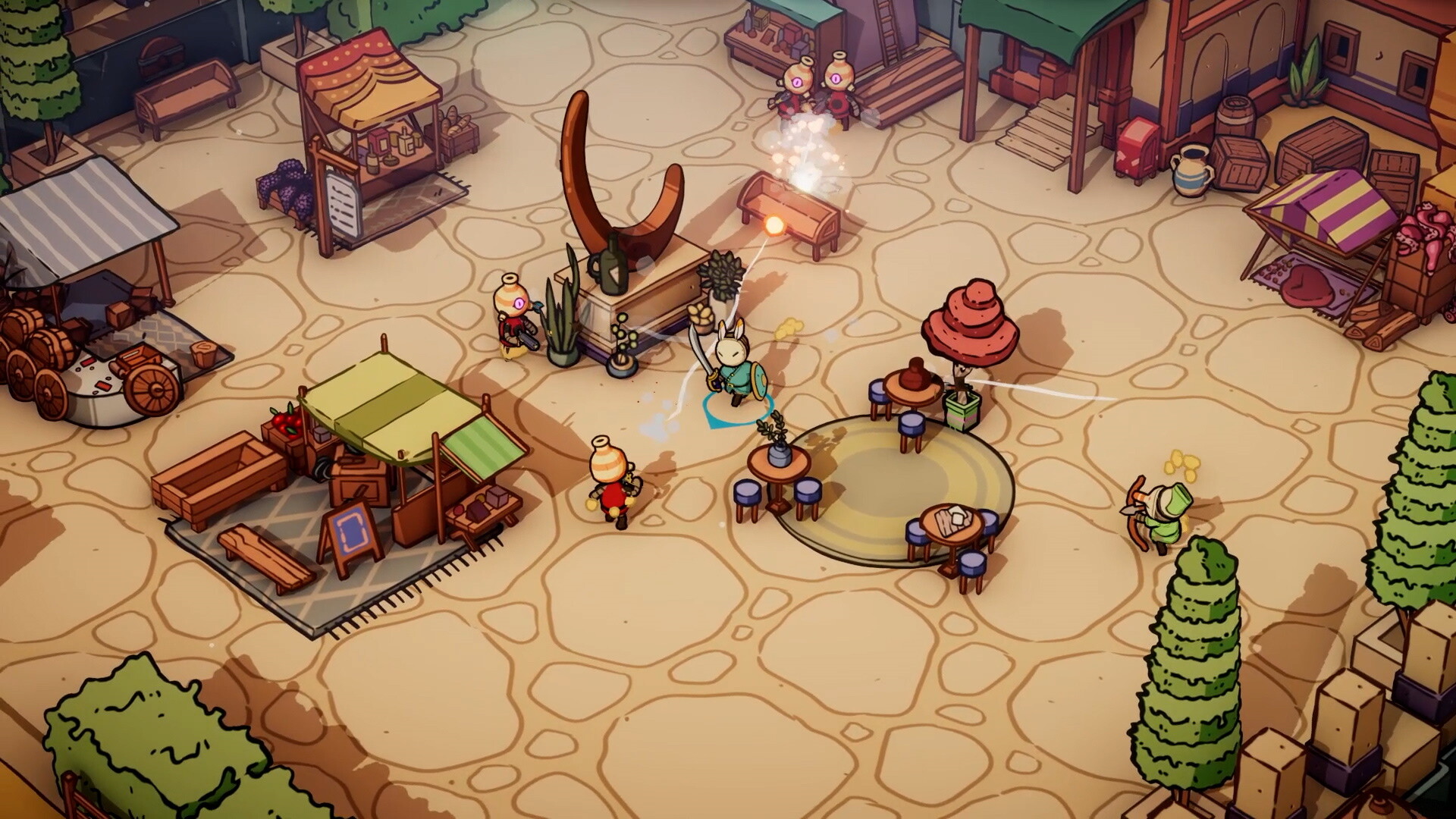
DuneCrawl is an online coop action-adventure game where players take on the roles of desert faring privateers. Together, players explore the dust seas by piloting their Dune Crawler, a gigantic walking crustacean festooned with cannons and treasure maps.
Contributions
As a Technical Artist, I created 3D environment art, shaders, and VFX. I was also responsible for establishing VFX pipelines, integrating art assets used for core gameplay mechanics, and adhering to art/tech direction with tool development.
Selected work
Process and Results
Crafting Immersive Spaces
Environment Art
I contributed modular environment assets, set dressing and trim-sheet work within DuneCrawl's established art direction. The official game footage shows the team's shared world, rather than a breakdown attributing every visible asset to me.
- Problem: New 3D environment assets needed to fit an existing hand-drawn visual style.
- Decision: Use modular kits and shared trim sheets while following the team's established art direction.
- Implementation: Created modular assets, collaborated with fellow artists on trim sheets, and integrated set dressing and gameplay assets.
- Result: Reusable environment pieces supported a cohesive setting. This is a qualitative account of my contributions, not a measured performance or time-saving claim.
From Polygons to Playability
Technical Art
I created shaders, VFX pipelines and customizable tools that supported art integration and gameplay needs. The official trailer is context for the finished game, not a recording of my tool workflow.
- Problem: Gameplay assets and effects needed to remain adjustable without drifting from the art direction.
- Decision: Combine shaders and particle systems with controls designers and programmers could adjust.
- Implementation: Created shaders, established VFX pipelines, developed customizable tools and integrated assets used by core gameplay mechanics.
- Result: Designers and programmers could modify supported game elements within the established visual style. No quantified speed or performance improvement is claimed.
Keep exploring