Technical art · DuneCrawl
DuneCrawl: Making 3D Feel Hand-Drawn
Inside the textures, props, and environmental details I helped shape for Alientrap's illustrated co-op adventure.
Technical Artist & Environment Artist, DuneCrawl
Published
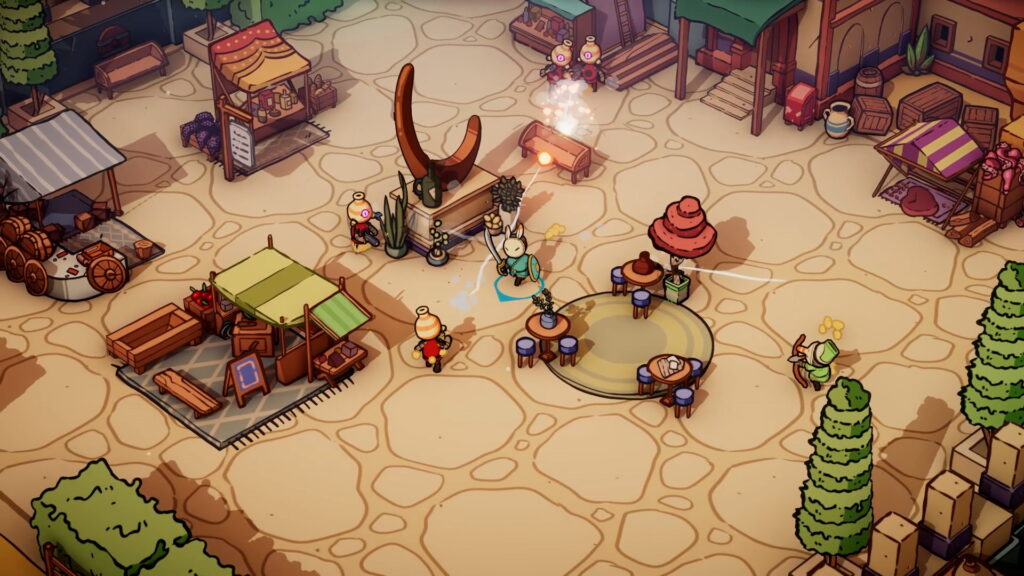
A world of sun-baked ruins, strange machinery, and giant cannon-covered crabs should probably look a little impossible. In DuneCrawl, it does. What makes the art especially interesting is that so much of it feels drawn by hand, even though players are moving through a functioning 3D world.
That balance between illustration and three-dimensional space shaped my work on the game.
I joined Alientrap partway through development, after the visual direction had already been established. My role wasn't to invent DuneCrawl's look. It was to help carry that look through the realities of production: creating and texturing 3D assets, refining environments, dressing foliage and points of interest, and exploring reusable material workflows that made iteration easier without flattening the personality out of each prop.
The interesting challenge wasn't simply making something look good. It was making it look like it belonged.
Project: DuneCrawl · Alientrap Games · Released January 5, 2026
My role: Technical Artist / Environment Artist
Focus of this article: Stylized texturing, 3D assets, environment polish, and Substance Painter workflows
A drawing with real depth
At a glance, DuneCrawl has the clarity of an illustrated world: strong contours, confident blocks of colour, and details that feel intentionally placed rather than mechanically generated. Underneath that appearance is actual 3D space, which has to support movement, interaction, and changing viewpoints.
Alientrap's broader environment-art approach is a great example of that balance. In the studio's official art breakdown, artist Ariane explains how the team used simple 3D shapes as guides, drew the visible detail from the game's camera angle, and projected the resulting artwork onto meshes in Unity. The geometry handles the space. The illustration carries the character.
My work focused on creating and refining assets within that established visual language.
And in a style this distinctive, accuracy isn't enough. A model can have the right silhouette and still feel out of place if its colour transitions, outlines, or surface detail belong to a different visual world. The real test is whether the asset fits naturally beside everything around it.
Texture like an illustrator. Organize like a production artist.
A common temptation with 3D texturing is to keep adding detail. More grain, more scratches, more wear. But DuneCrawl's style rewards restraint. A few marks in the right places can explain a wooden surface or break up a large shape. Too many can fight the outline, muddy the values, and pull the object away from the hand-drawn look.
That made the texturing work as much about editing as painting.
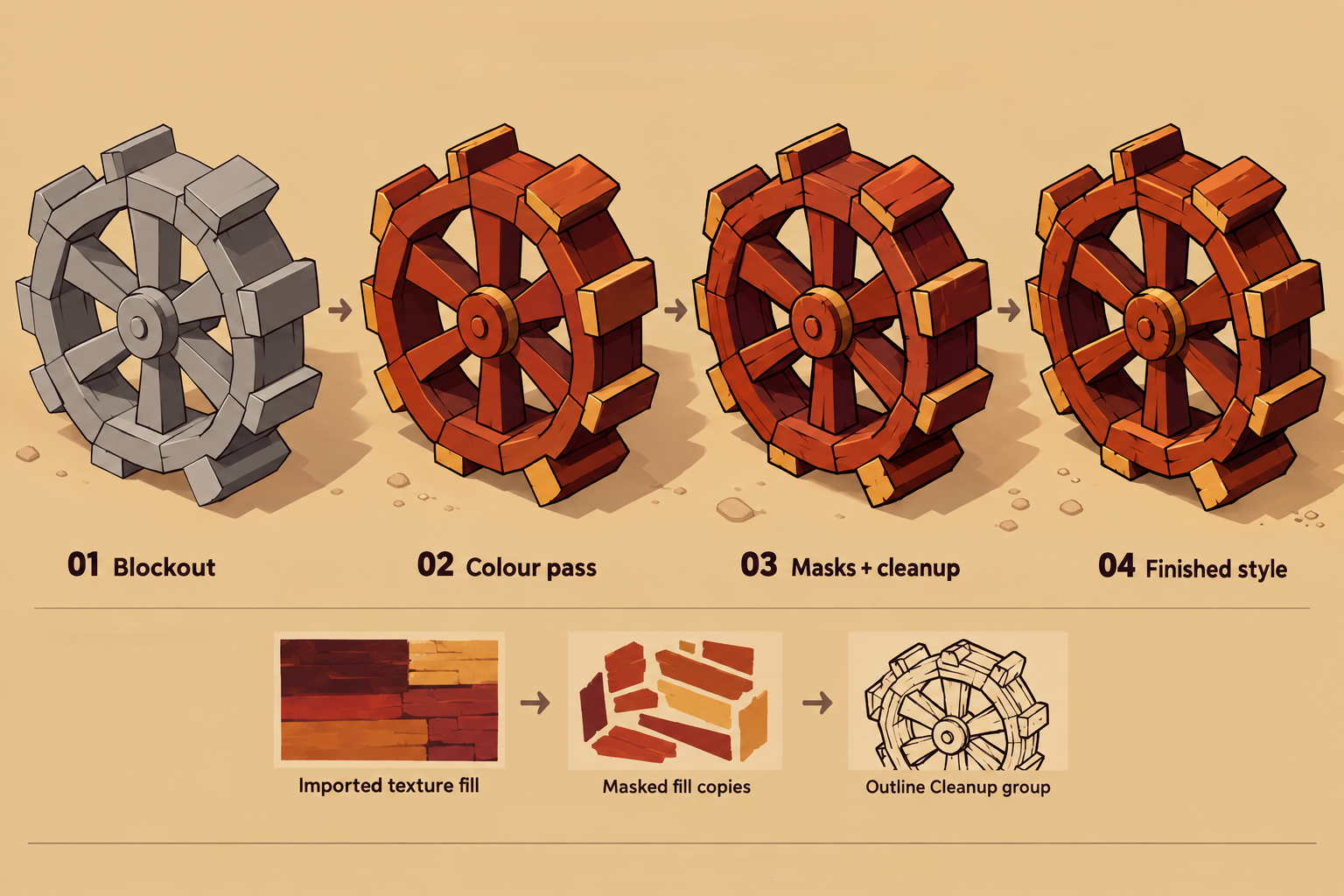
In Substance Painter, I experimented with and implemented reusable material and layer setups. I wanted a reliable starting structure for new assets, without turning them into copies of each other. Fill layers could establish or change broad colour treatments. Painted masks could control where those treatments appeared. Groups helped keep targeted corrections separate from the rest of the surface.
The point wasn't a one-click style filter. It was to spend less effort rebuilding the same setup and more attention on the choices that gave each object its character.
Inside the waterwheel texture
One saved waterwheel Substance Painter project offers a concrete look at that approach. Its layer structure includes an imported texture referenced by fill layers, additional solid-colour fills, painted masks, and a group named Outline Cleanup with a masked fill inside it. The saved export selection targets the waterwheel's base-colour texture.
Those aren't glamorous features on their own. What matters is the working principle they reveal: separate the starting surface from the decisions you may need to revisit. Colour can change without throwing away every other part of the treatment. A painted adjustment can stay local. An outline correction can remain easy to find.
For stylized art, that flexibility is valuable. Consistency comes from a shared visual goal, not from applying an identical set of marks to every model.
From individual props to an explorable world
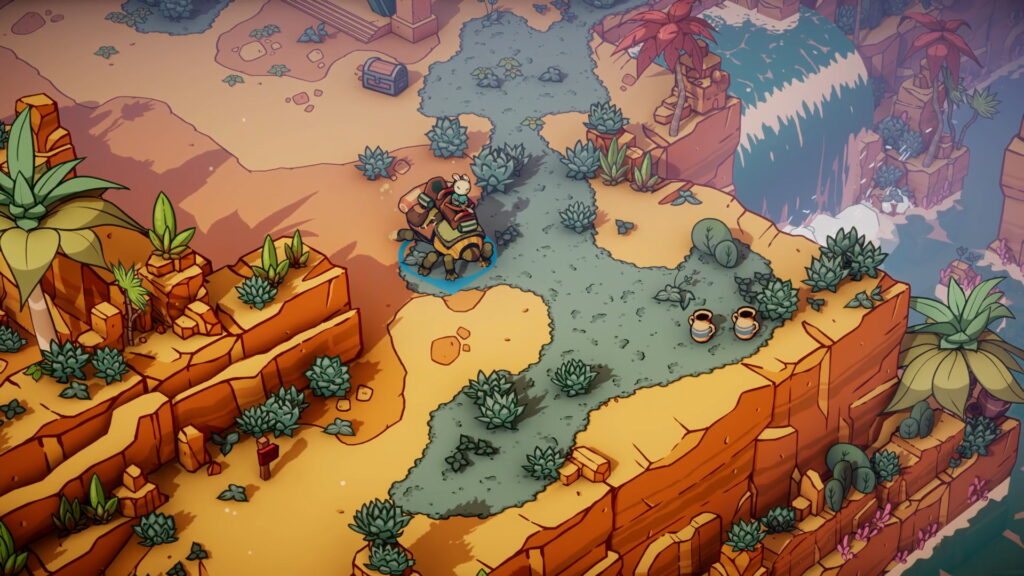
My work wasn't limited to asset surfaces. I also contributed to environment refinement, trees and foliage dressing, smaller points of interest, and exploration secrets.
That's where art decisions become player-facing decisions.
A prop can look great in isolation and disappear into visual noise once it's placed in a busy level. Foliage can make an area feel richer, but it can also interrupt a silhouette. A small environmental detail might seem unimportant until it draws a player's attention toward a corner worth investigating.
Moving between close-up texture work and larger environment polish gave me two perspectives on the same problem. At the asset level, I was looking at material treatment, shape, and edges. At the scene level, I was looking at how those objects worked together to make a space readable, cohesive, and worth exploring.
The value of a workflow that leaves room for judgment
Working on DuneCrawl reinforced something I value about technical art: the best production tools don't replace artistic judgment. They protect time for it.
Reusable Painter layers helped me approach new textures with structure. But the final decisions still came down to the asset, the surrounding environment, and the art direction already established by the team. The same was true when moving from individual models to whole scenes. Nothing existed in isolation.
I'm proud to have contributed 3D asset work, stylized textures, and environment polish to a shipped game with such a recognizable identity. The bigger lesson I carry forward is simple: a strong style isn't something you add at the end. It's something you keep protecting through every production decision.
This article focuses on my asset and environment work. For my wider contributions in shaders, VFX, tools, and art integration, see my full DuneCrawl portfolio case study.
About the author
Mohammed Qamar is a game developer and technical artist whose work spans environment art, real-time VFX, shaders, gameplay integration, and production tools. He contributed to DuneCrawl at Alientrap Games. See more work at moqam.ca.
Project and sources: Official Alientrap credits · DuneCrawl on Steam · Alientrap's environment-art breakdown · DuneCrawl portfolio case study · MobyGames credit profile
More about Mohammed Qamar's work and credits.