Level design · Rocket Rumble
Rocket Rumble: Making Racetracks Feel Alive
Space-time rifts, animated spectators, changing graffiti and cinematic cameras: the details behind my track work at PixelNAUTS.
Level design, technical art and gameplay capture, Rocket Rumble
Published
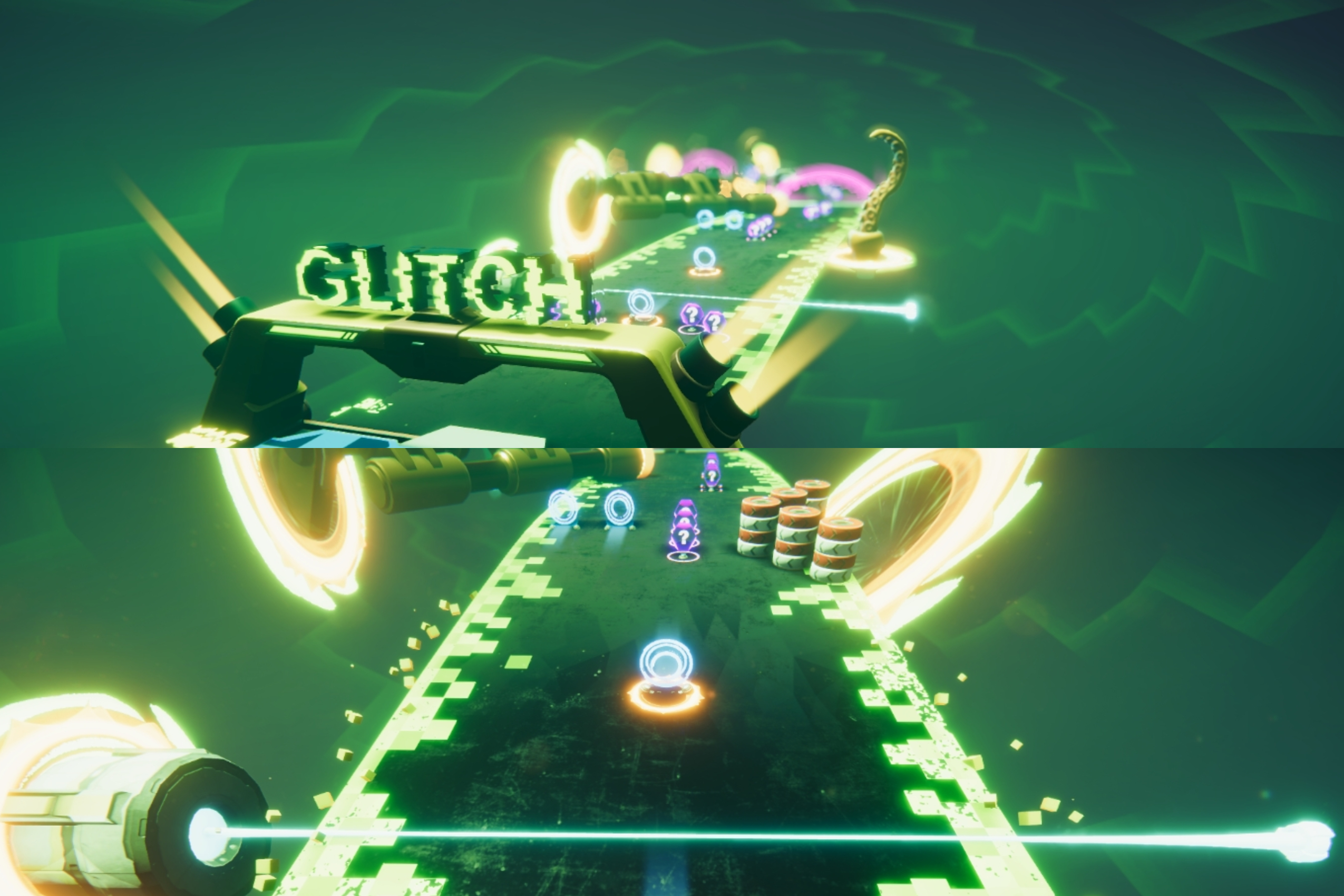
Racetracks need more than a route from start to finish. They need a reason to feel like a particular place. On Rocket Rumble, that could mean a tear in space-time, an audience in the bleachers or a wall of graffiti that changes between runs.
At PixelNAUTS, I worked on Glitch, The Pirate Bay and the circuit track. I handled most of Glitch's track work and contributed to the other two.
Project: Rocket Rumble, a multiplayer party racing brawler by PixelNAUTS.
Focus: Track identity, environmental animation, placement tools and cinematic gameplay capture.
Glitch: bringing different worlds together
The idea for Glitch was cosmic: a rupture in space-time pulling pieces of the other tracks into one place. The design challenge was making that collision feel intentional. It needed a visual idea that could connect very different props and obstacles.
I approached it as a remix of the game's existing worlds. Tentacles could emerge from the ground, echoing The Pirate Bay. Tire stacks and other familiar track elements could become parts of floating obstacle assemblies. Rather than inventing an unrelated collection of hazards, I combined recognisable themes in unfamiliar arrangements.
That idea carried through to the end of the track, where players jump through a crack in time to finish. The rupture gives the track a destination as well as a theme: the world is coming apart, and the route leads through it. Ratchet & Clank: Rift Apart and broader science-fiction ideas about portals, black holes and travel through space-time were inspirations for my thinking.
The result was a track built around one connecting idea: a glitch in the system. Reusing motifs from other tracks became part of its identity, rather than something to hide. It also gave me a useful design question for each obstacle arrangement: does this look like another piece of the world has been pulled into the rift?
An audience that belongs in the world
Other tracks already had sources of environmental life, including moving machinery, portals, waves and effects. A more traditional racing circuit needed something that felt appropriate to its setting. I wanted an audience in the bleachers, even if players only registered it in passing during a race.
The crowd also offered something for the track's intro cutscene to show. It could establish the venue before the action began, then remain part of the atmosphere once players were moving.
During development, I first tried a 2D-sprite approach suggested by a teammate, then moved to a small 3D character for the setup. The important part was avoiding a stand full of identical figures performing the same motion together.
Variation without placing every performance by hand
I varied the animation clips, start times, playback speeds and spawn positions. Each layer solved a different kind of repetition: different clips changed the action, time offsets broke synchronisation, speed changes altered the rhythm, and position changes kept the arrangement from looking fixed.
The result was an audience with activity distributed across the bleachers, rather than a group moving in lockstep.
For me, the lesson was that background animation does not need to demand attention to serve the scene. The crowd gave the circuit an appropriate source of life, while the intro camera gave that detail a moment in the foreground.
Graffiti: authored locations, changing identities
The circuit also featured names and tags from streamers and content creators. They arrived gradually, so placing each one permanently by hand would have made updates awkward and tied each name to a predictable spot.
I built a system that populated graffiti at specific, hand-authored positions while varying which names appeared at those positions between plays. The placement stayed intentional, but a particular tag was not permanently attached to a particular wall.
The graphics used a texture atlas. I kept texel density in mind so the names would hold up visually, and set up the workflow so updating the textures would not undo the existing placement work. The distinction mattered: the scene positions were authored once, while the content assigned to them could change.
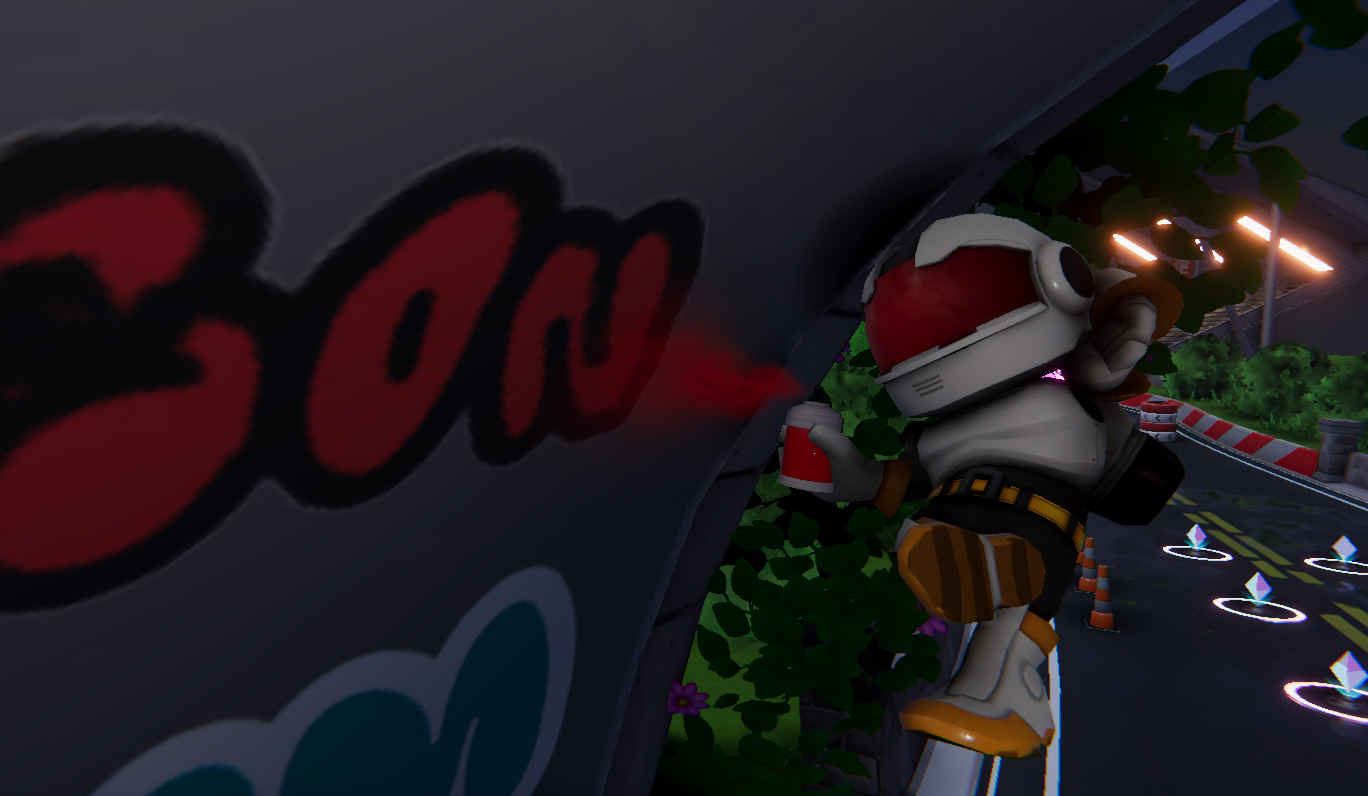
The result was a reusable setup for incoming contributions. It supported variety without asking the team to rebuild the track dressing whenever more names arrived. The studio's development blog also documents the circuit's graffiti and signs, alongside its car-racing obstacles and changing weather.
Using track splines for cinematic capture
We used the third-party Unity asset Dreamteck Splines and repurposed it for our needs. One of my uses was gameplay recording: I hooked cameras up to the track splines and configured them to provide cinematic angles while we played.
The goal was to capture usable shots from actual gameplay sessions. Following the track's path gave me a starting structure for the cameras, which I could configure around the views we wanted. Footage from those sessions could then be cut together into a more varied presentation of the game.
Configuring the cameras around an existing spline package extended the usefulness of the track data beyond the racing route itself.
What connects these decisions
Glitch's mixed-world obstacles, the animated crowd, the graffiti system and the capture cameras addressed different problems. What connects them is the balance between authored choices and reusable systems.
The hand-authored part establishes intent: a track's theme, a good graffiti location, a camera angle or a place for spectators. The system carries that intent through repetition and variation. That is the part of level design I enjoy: building a place with character, then making the tools and details support it.
For the broader project and my contribution summary, see the Rocket Rumble case study.
More about Mohammed Qamar's work and credits.